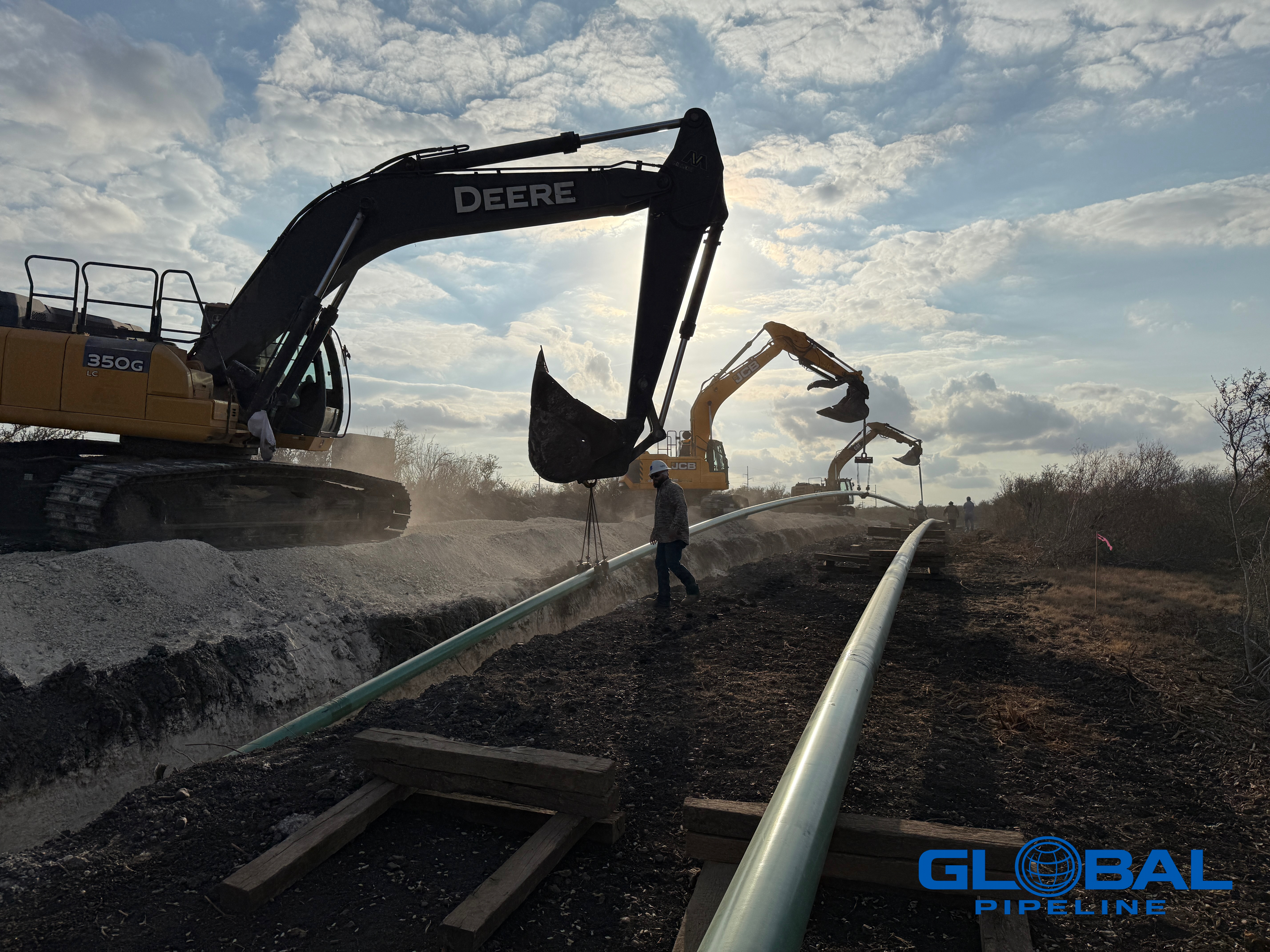
Strategies for Reducing Environmental Footprints in Pipeline Construction May 20, 2026
The first step in reducing environmental impact is to conduct thorough environmental impact assessments (EIAs). These assessments enable companies like Global Pipeline to identify potential environmental risks associated with pipeline construction. By understanding these risks early on, companies can design project plans that minimize ecological disruption. EIAs help pinpoint sensitive habitats, allowing construction teams to develop strategies that avoid these areas whenever possible.
Another effective strategy is to adopt advanced construction methodologies. Horizontal directional drilling (HDD) is a prime example of a technique that minimizes surface disruption. Unlike traditional trenching methods, HDD involves drilling below the surface, reducing the impact on the surrounding environment. This method is particularly beneficial when pipelines need to be installed across rivers or under roads, as it drastically reduces the need for large-scale excavation.
Utilizing eco-friendly materials and technologies is also crucial in reducing the environmental footprint of pipeline construction. Opting for bio-based lubricants, corrosion-resistant coatings, and energy-efficient machinery can significantly decrease the ecological impact. Furthermore, investing in pipeline materials that are resistant to leaks and designed for long-term sustainability helps prevent environmental contamination.
Implementing rigorous maintenance and monitoring programs is another essential strategy. Regular inspections using state-of-the-art technology, such as drones and remote sensing tools, can detect leaks or structural weaknesses before they become significant issues. Such proactive monitoring not only protects the environment but also extends the lifespan of the pipeline, reducing the need for frequent reconstructions and repairs.
Collaboration with local communities and stakeholders enhances both the environmental and social sustainability of pipeline projects. By fostering open communication channels, companies can gain insights into local environmental concerns and cultural sensitivities. Engaging with communities also builds trust and can lead to innovative solutions that further reduce the environmental footprint.
Mitigation of greenhouse gas emissions is a considerable aspect of pipeline construction. Implementing measures to minimize emissions from construction activities, such as optimizing fuel usage in machinery and using cleaner fuels, is vital. Additionally, constructing energy-efficient infrastructures, such as pumping stations powered by renewable energy, can significantly cut down emissions during pipeline operation.
Lastly, companies should focus on restoration and rehabilitation of affected areas post-construction. This involves replanting native vegetation, restoring habitats, and ensuring that local wildlife can safely return to the area. Successful restoration efforts can help mitigate the environmental damage and can even enhance biodiversity in some cases.
Reducing the environmental footprint of pipeline construction is not only a responsibility but also an opportunity for companies like Global Pipeline to lead by example in sustainable development. By adopting comprehensive strategies that integrate environmental considerations at every stage of the project, pipelines can be constructed and operated in harmony with the natural world. Global Pipeline continues to innovate and refine these strategies, ensuring that environmental stewardship remains at the forefront of their operations.
/filters:no_upscale()/filters:format(webp)/media/b032620a-0eec-4d5f-980b-29342db66d5b.jpeg)
/filters:no_upscale()/filters:format(webp)/media/862764d9-e633-456a-bcbb-18847c69cbb4.png)